
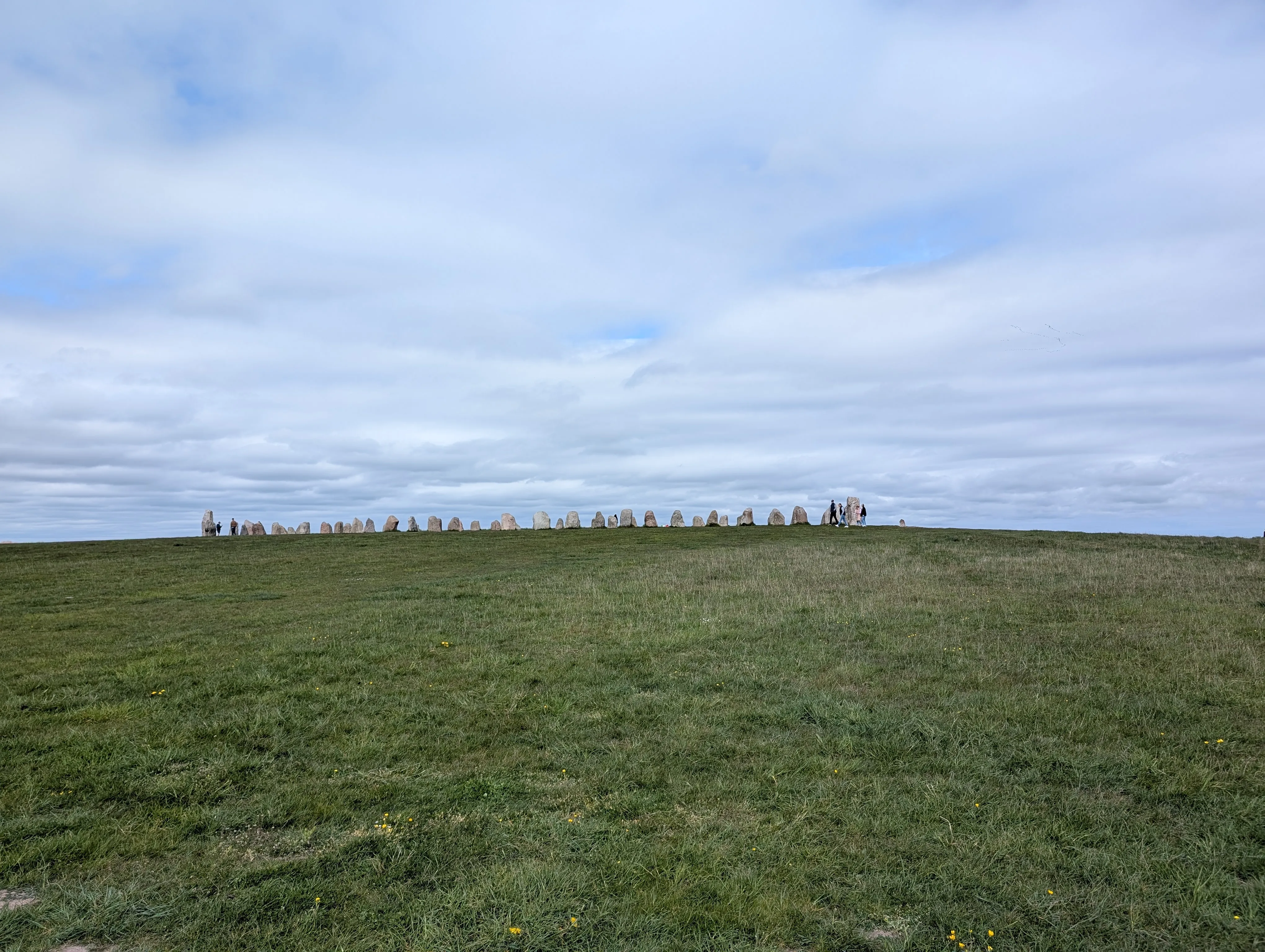
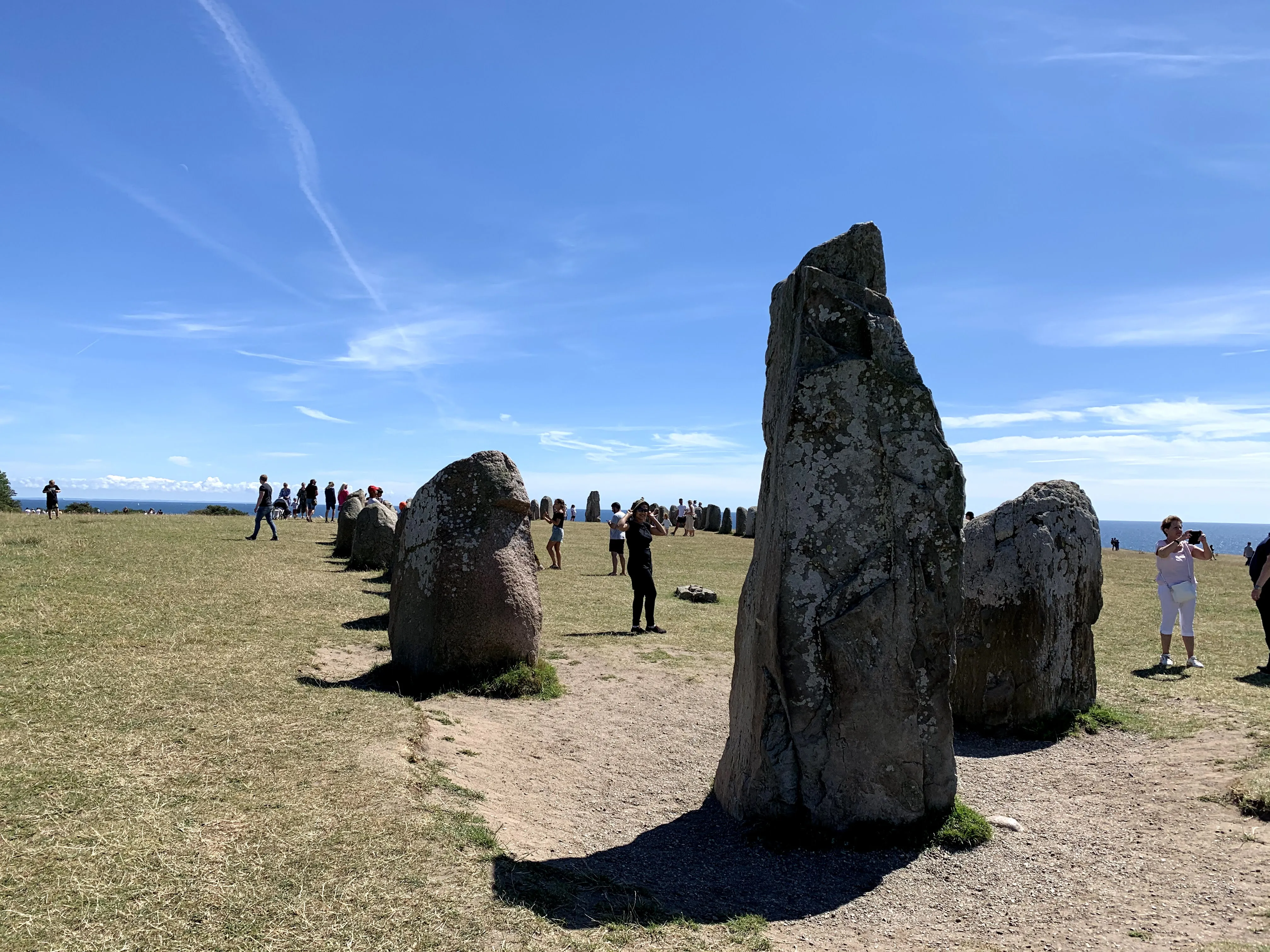
The air was fresh, and the sun was bright as we made our way to Ales Stenar. This place is one of southern Sweden's most historic spots, a hidden gem that feels a world away from everything. It has the same kind of mystery as England's Stonehenge but without the big crowds and gift shops.
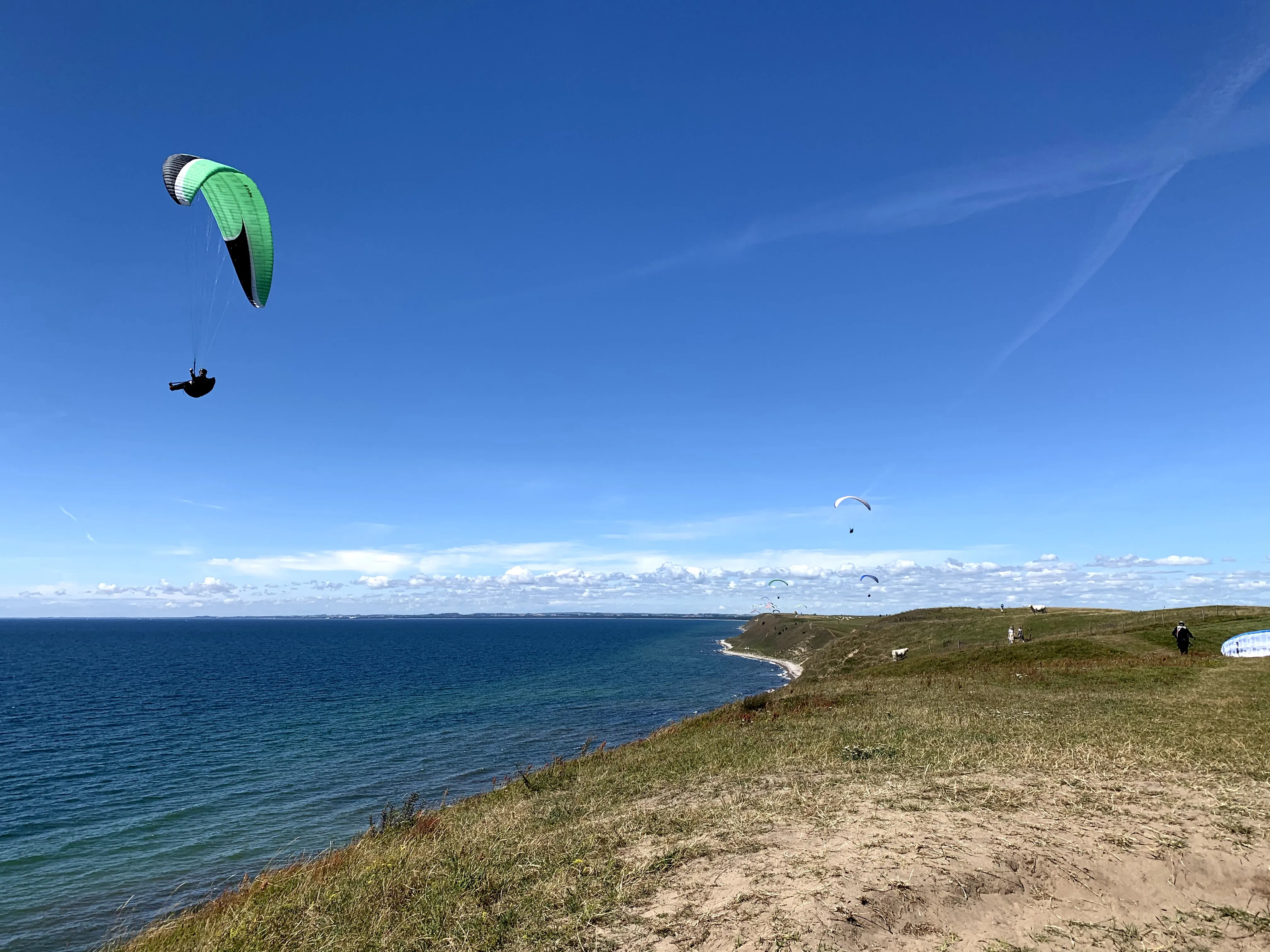
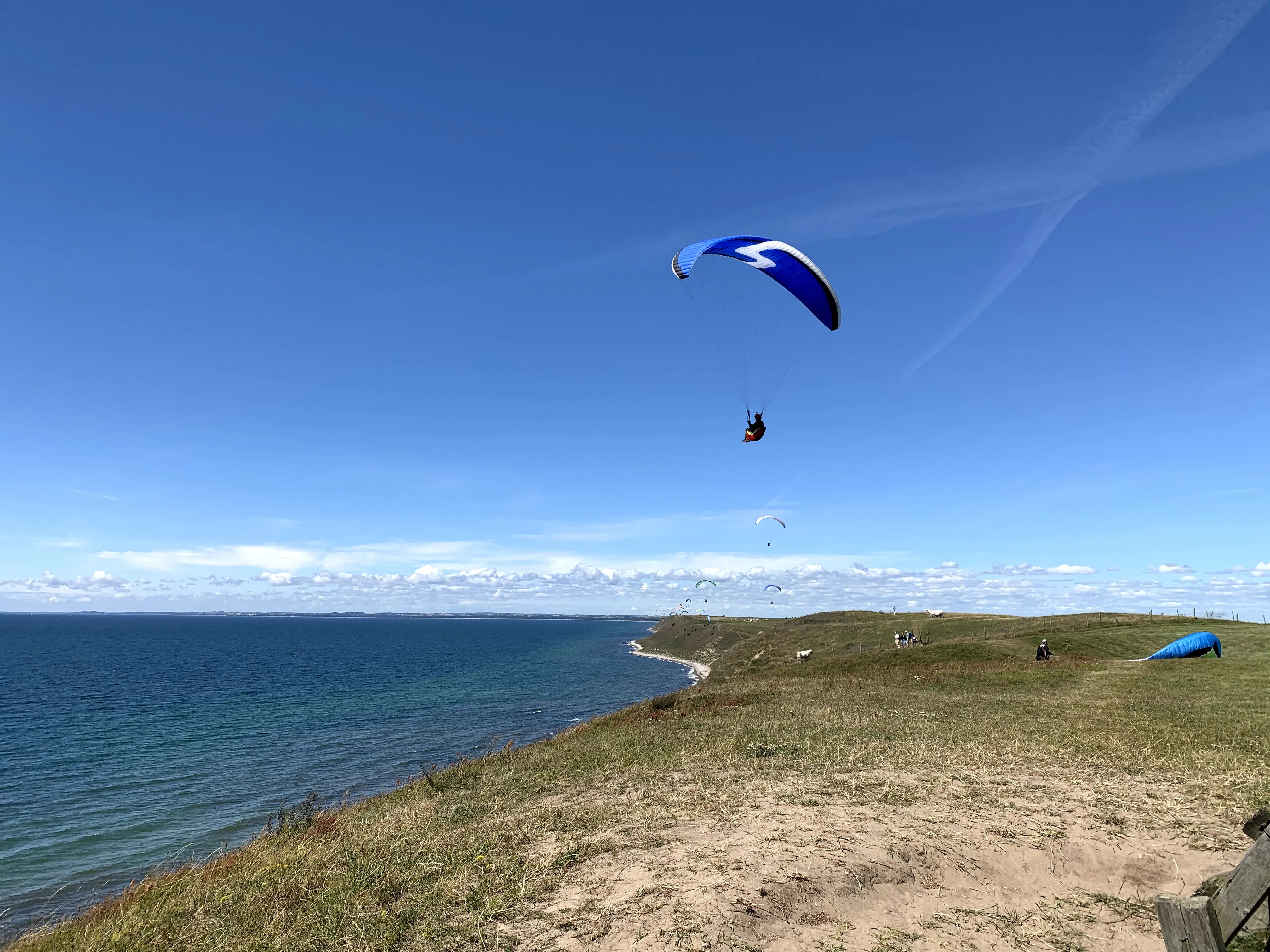
The journey itself was a treat. We traveled through the rolling, green landscape of Skåne, a region known for its beauty. As we got closer to the coast, we started to see colorful shapes floating in the sky—paragliders riding the wind, looking like birds soaring over the sea. When we finally arrived, the view was breathtaking. The stones are on a grassy hill right by the sea, with a perfect view of the water and the coastline.
I just stood there for a moment, looking at the huge stones lined up like a giant ship. It's easy to see why this spot is so special. You can feel the history and the mystery in the air.
The modern world wasn't completely gone, though. While I was lost in thought, a few paragliders drifted lazily overhead, their bright parachutes a perfect contrast to the ancient, grey stones below. They looked so peaceful, floating silently over the land and sea, almost like modern-day explorers discovering the same amazing view.
Sweden's Stone Ships: A Tale of Mysteries
Looking at these giant rocks, you can't help but wonder: Why are they here? What did they mean to the people who built them so long ago?
But what if I told you that Ales Stenar isn't the only monument like this in the area? Not far away lies another, equally mysterious site: the stone ship at S Ugglarp.
Imagine a second ship, this one with 39 upright stones, stretching 45 meters long. Just like with Ales Stenar, this site raises all kinds of questions. Who were the people who moved these huge stones? Why did they build two of these monuments? What connects these two incredible places?
This second stone ship adds a whole new layer to the mystery. It’s a powerful reminder that these monuments weren't just a one-time thing; they were part of a bigger culture and tradition.
But here’s the most curious part: Ales Stenar has 59 stones, and the one at S Ugglarp has 39. Are these just random numbers, or do they mean something special? In ancient cultures, numbers often had a deeper, spiritual meaning. Could these numbers represent something lost to time? A specific number of days, a certain constellation, or even a story we no longer know?
This difference makes the mystery even deeper. It suggests that while the stone ships served a similar purpose, there was something unique about each one.
Uncovering the Theories
Even though no one knows for sure, there are many interesting ideas about what these stone ships were used for. These ideas show us how curious people have been for centuries.
A Viking Burial Site
One of the most popular theories is that these were burial monument. People from the Viking Age often buried important people in "stone ships," which were thought to help guide the dead on their final journey. This is a powerful idea, especially since archaeologists have sometimes found graves with burned bones from the Late Iron Age inside similar monuments. However, a full grave has never been found at Ales Stenar, so the mystery remains.
A Giant Sundial
Another fascinating theory is that the stones are a solar calendar or a giant sundial. The stones at Ales Stenar are placed in a way that the sun sets at the northwestern tip of the ship in the summer and rises at the opposite end in the winter. This alignment with the seasons suggests that the people who built it had deep knowledge of the sun and stars. Maybe it was a way for them to keep track of time and important events.
A Place for Ceremonies
Some experts believe these stone ships were ceremonial sites or places for special gatherings. Their amazing location would have made them perfect spots for rituals or important meetings. The stones could have marked a place of power, where people came together to celebrate or honor their leaders.
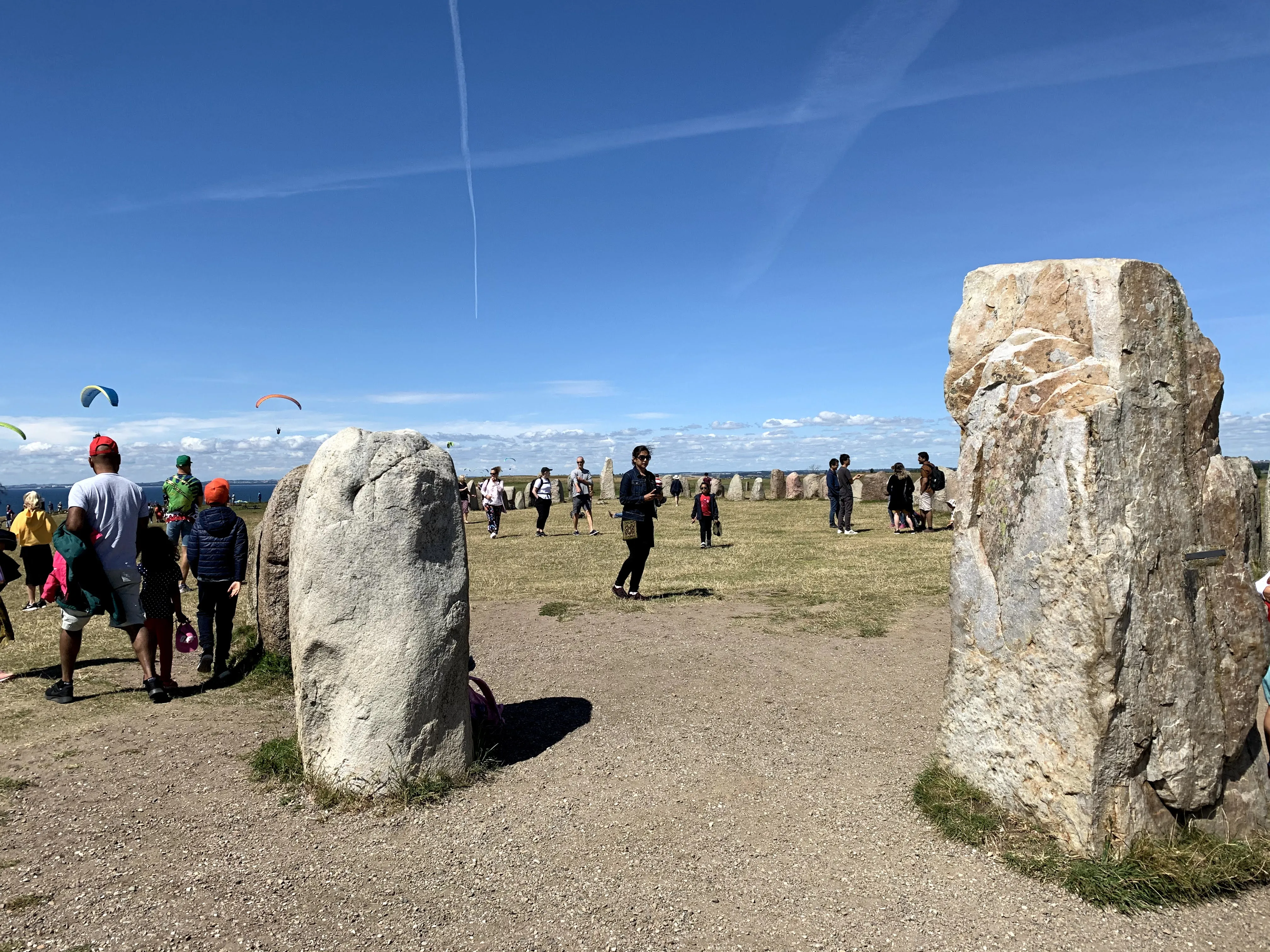
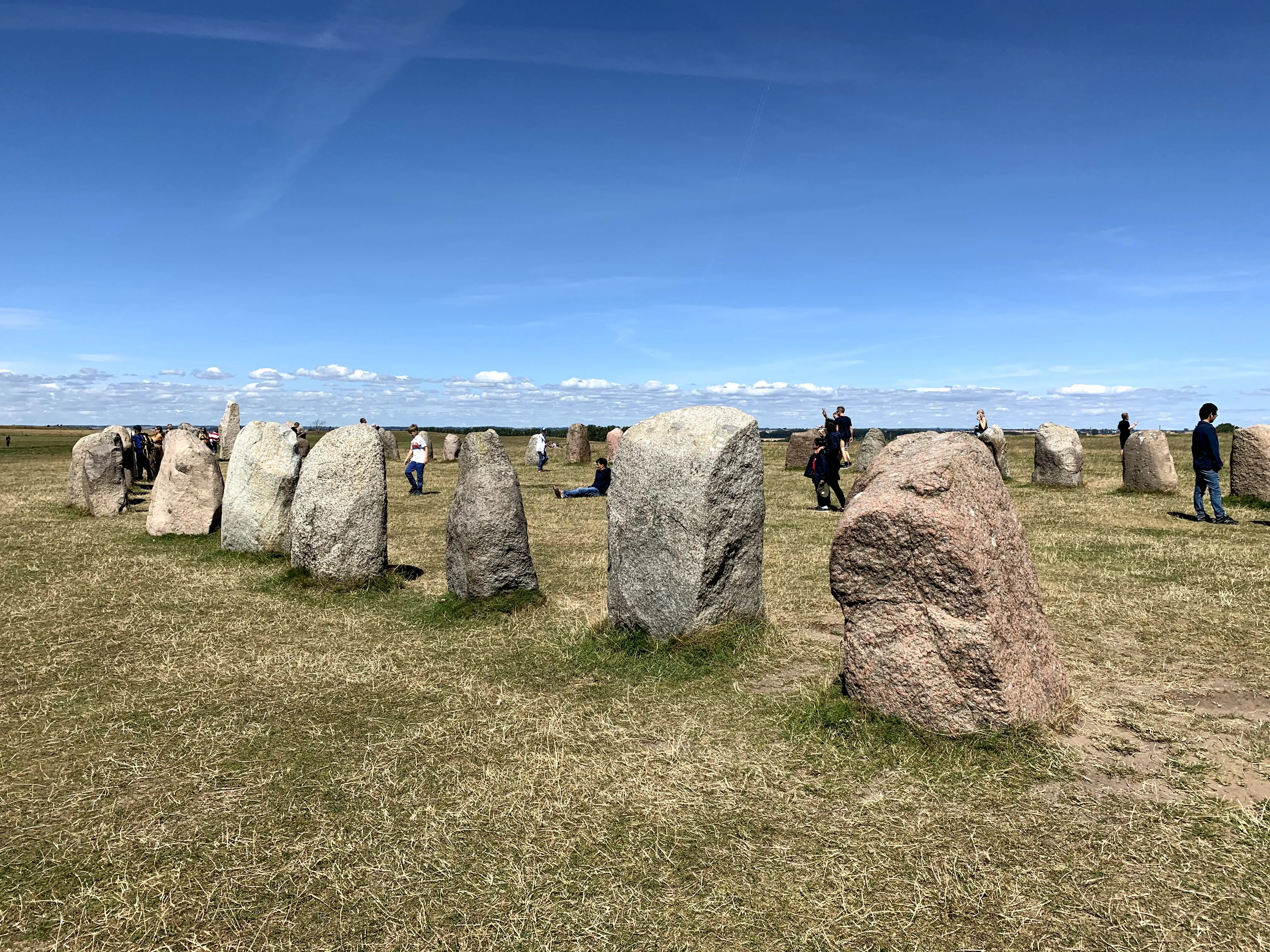
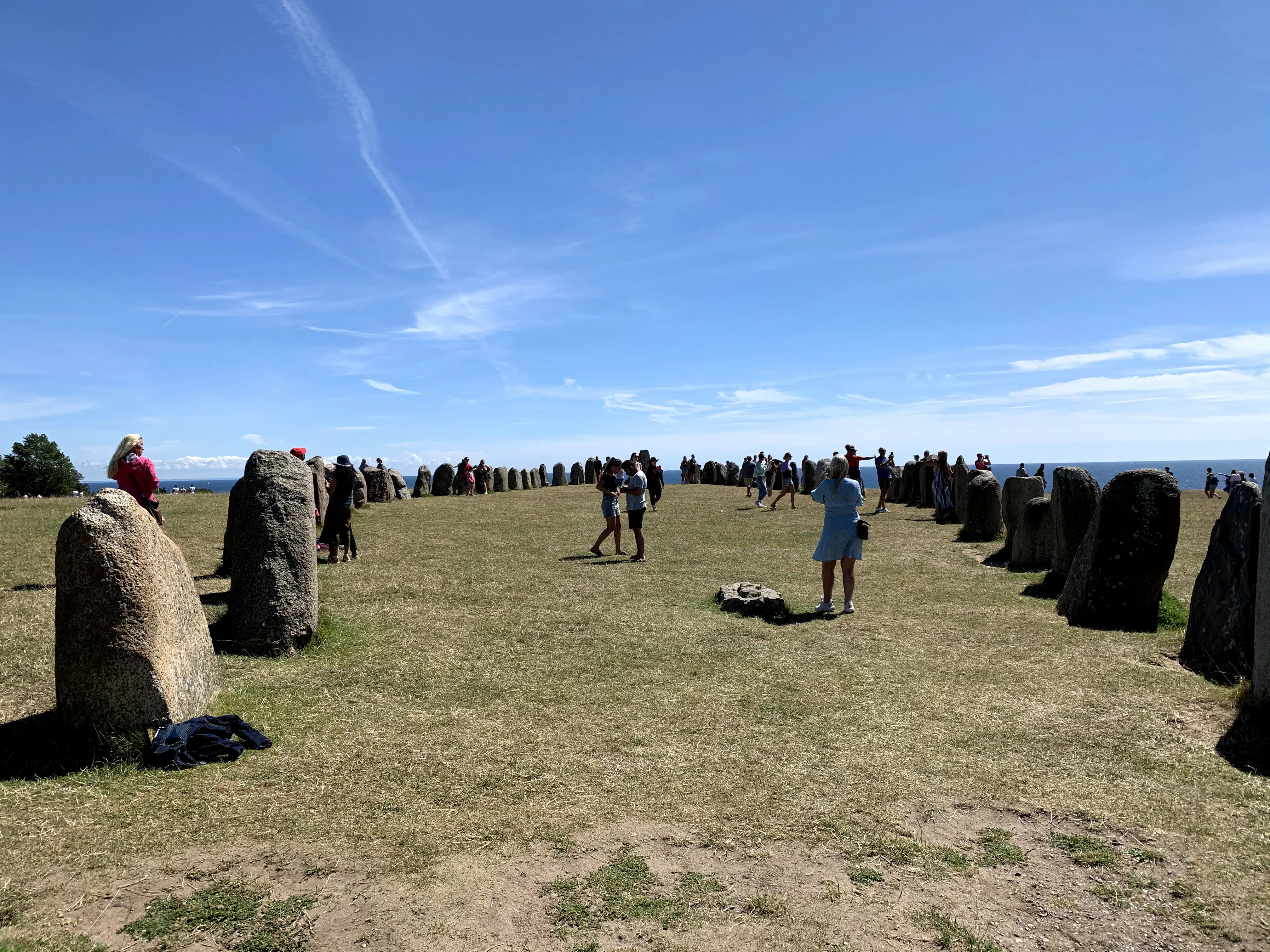

No matter the true reason, these sites are a reminder of how much we still have to learn about the past. They’re places that make you think about ancient people and their beliefs, and they show that the wonders of the world can be found in the most unexpected places. Even today, people are drawn to these special sites, whether it's to walk among the stones or to fly over them.
Have you ever visited a historical place that made you feel like you were solving a mystery?